What are the benefits of a flash?

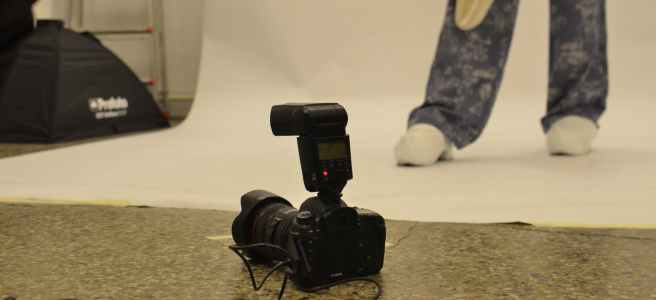
A flash can come both built into a camera, as well as an attachment that goes on top of a camera to project additional light, or to provide light when there is none.

The strength of light from a flash is measured in guide numbers. A moderate guide number (such as 28) will be adequate for many situations.

The light from an external flash can be bounced, meaning the flash head (where the light comes from) will be titled to create a softer effect. If the flash head is aimed directly at a subject, a harsh shadow effect is produced against a flat background (like a wall).

On the camera, the flash can be set to fill flash. This allows more ambient light, such as from the sun or a tungsten light bulb, to be incorporated with a photo.
Godox, Neewer, and Sunpak are popular brands.

What are the benefits of a tripod?

A tripod keeps a camera steady, so pictures do not come out blurry, especially in a dark environment.

It is also helpful in giving you time in composing a shot, unlike when shooting handheld.

There are tripods with either a ball head or a video head. A ball head allows to quickly make adjustments to composition, with the tripod plate (the accessory that connects the camera to the tripod) on a small metal ball. Video tripods have the ability to “pan and tilt” a camera, meaning you can swivel the camera (pan) and point it up and down (tilt).

I recommend using a ball head for still photography. A video tripod is better suited for videographic content.

Tripods are either made of aluminum or carbon fiber. Carbon fiber tripods are studier and lighter, but cost more.

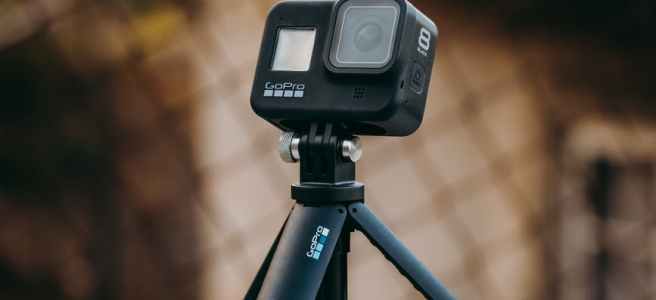
There are tabletop tripods with a ball head. They are very small and are helpful in macro (close-up) photography, such as toys and flowers.

Some tabletop tripods have bendable legs, allowing you to use dramatic angles.

Popular brands include Manfrotto, Peak Design, and Slik.

Why should I use a camera bag?

A camera bag is important, because it keeps your equipment safe and organized.

For very small cameras, there are ones that just hold the camera and no other accessories, except possibly the wrist strap.

Then there are large bags that not only hold a camera substantial in size, but also additional lenses and a flash.

Though there are ones that come everywhere in between.

You shouldn’t let a camera dangle from your neck (or wrist, if you use a wrist strap). A neck or wrist strap should be seen as analogous to a seatbelt rather than as a tool for convenience.

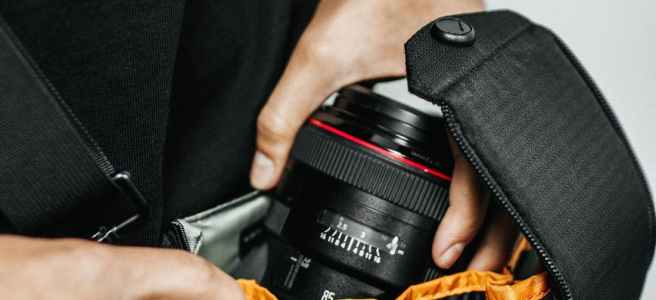
I use a tote bag designed for camera gear by Peak Design, a San Fransisco-based company. It holds three of my cameras (one of which is very small) and an external flash.

Why should I use a UV filter?

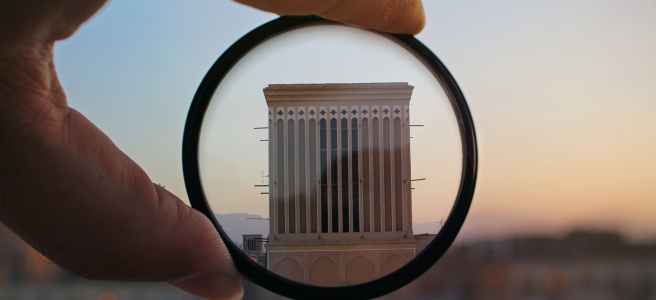
A UV (ultraviolet) lens filter protects your lenses from scratches, finger prints, and damage to the front of the lens.

It also makes colors more vibrant by removing haze from UV light, but the difference is subtle.

Make sure to buy one that fits the filter size of your lens. There is a very small image of a circle with a line through it on the front lens, next to which there is a number. If the number, for example, is 77, that means you should use a 77mm filter (the measurements are in millimeters).

Prices range from less than $10 to well over $100. Some brands include Hoya, Tiffen, Urth, and Zeiss.

What is shutter speed?

Shutter speed is how long light travels to a digital camera’s sensor, where light is received by the camera.

It’s not unusual for a shutter speed to be less than a second, such as 1/200 of a second.

Fast-action photography benefits from a fast shutter speed. A faster shutter speed can be obtained by selecting a wider aperture, or lens opening.

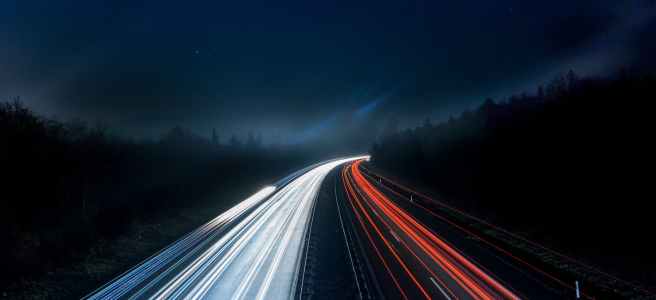
A slow shutter speed is good for creating a blur effect, like when photography moving carousels or car headlights at night.

Setting a camera to Shutter Priority mode allows you to choose the shutter speed, and the camera will decide which use aperture to use.

Manual mode allows you to select both the aperture and shutter speed.

Using a neutral density lens filter makes the shutter speed slower. Often, photographers use this accessory to create a blurred effect for waterfalls.

What is aperture?

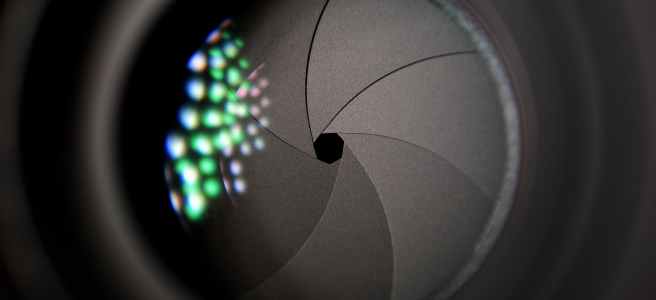
An aperture is the opening of a lens that allows light to reach a digital camera’s sensor, where light is received by the camera.

The smaller the f/stop number, the larger the opening.

You will see the increments on the lens, or if a lens does not have increments, you can change them on a dial on the camera.

Every increment is called an f/stop (or stop, for short). Though there are smaller increments, such as 1/2 or 1/3 of a stop.

If you have the camera set on automatic, the camera will decide the aperture. Switch the camera to either Aperture Priority mode or Manual mode to select the aperture you want.

The wider the aperture, the more out of focus the background (or if you wish, foreground) will be.

Wide angle lenses, or those without telephoto strength (or magnification), do not provide as much out-of-focus effect.

The out-of-focus effect is called “bokeh.”

An advantage of using a wide aperture is that shutter speeds are faster, which is good for action photography.

Macro (close-up) photography is also a good time to use strong bokeh. Small subjects such as flowers, toys, and bugs stand out better with an out-of-focus background.